

categories
- Artificial Intelligence
- Podcasting
- Content Creation
- Blogging
- Digital Marketing
writing style
- Informative
- Human-like and conversational
- Beginner-friendly
- Clear and practical
- SEO-optimized
introduction
Content creation has evolved rapidly over the past few years. Bloggers, marketers, and creators are constantly searching for ways to produce more content while saving time. One of the most powerful strategies today is repurposing blog posts into podcasts.
Podcasting has become extremely popular because people enjoy consuming information while multitasking. Instead of sitting down to read a full article, many prefer listening while driving, exercising, or doing household tasks. This shift in content consumption has made podcasts one of the fastest-growing media formats online.
However, many bloggers hesitate to start a podcast because recording audio can be time-consuming. Traditional podcast production often requires microphones, editing software, quiet recording spaces, and hours of post-production work.
Fortunately, artificial intelligence has changed the game. Voice cloning technology allows creators to generate realistic voice recordings using AI. With just a short sample of your voice, AI tools can create a digital version that sounds like you. This voice can then read your blog posts automatically.
Tools like ElevenLabs and Descript make it possible to transform written content into professional-sounding podcasts in minutes.
This means that a blog post you already wrote can quickly become an audio episode that reaches listeners on platforms like Spotify or Apple Podcasts.
In this comprehensive guide, you will learn how to clone your voice and convert blog posts into podcasts in under ten minutes. You will also discover the best tools, strategies, and tips for creating engaging AI-generated podcast content that expands your audience and boosts your online presence.
what is voice cloning
Voice cloning is a type of artificial intelligence technology that replicates a human voice digitally. After analyzing a short recording, AI systems learn the characteristics of the speaker’s voice, including tone, pitch, rhythm, and pronunciation.
Once the AI understands these voice patterns, it can generate new speech that sounds like the original speaker. This allows written text to be converted into spoken audio using the cloned voice.
Voice cloning is powered by advanced developments in Artificial Intelligence and Machine Learning. These technologies enable computers to process large amounts of voice data and reproduce natural speech patterns.
Voice cloning is now used in several industries, including:
- podcast production
- audiobook narration
- video voiceovers
- customer support automation
- accessibility tools
For bloggers and content creators, voice cloning offers an efficient way to transform written articles into audio content without recording every sentence manually.
why turn blog posts into podcasts
Repurposing blog content into podcasts provides many advantages for creators and businesses.
reach a wider audience
Different people prefer different types of content. Some enjoy reading articles, while others prefer listening to audio. Turning blog posts into podcasts helps reach both audiences.
maximize existing content
Instead of constantly creating new material, you can reuse blog posts you already wrote. A single article can become multiple content formats, including:
- podcast episodes
- YouTube narration
- social media audio clips
save time in content production
Recording a podcast traditionally can take hours. Voice cloning reduces production time dramatically by automatically generating audio from text.
increase brand authority
Publishing content in multiple formats makes your brand appear more professional and authoritative. Blogs combined with podcasts can position you as a trusted expert in your niche.
improve accessibility
Audio content helps people who prefer listening or those who have difficulty reading long articles. Podcasts allow information to be consumed more easily.
tools for cloning your voice
Several AI platforms make voice cloning simple and accessible. These tools allow creators to generate high-quality voice recordings from written text.
elevenlabs
ElevenLabs is widely known for producing extremely realistic AI voices.
Key features include:
- high-quality voice cloning
- natural speech generation
- multiple language support
- customizable voice styles
Many creators use ElevenLabs for podcasts, audiobooks, and video narration.
descript
Descript is a powerful audio editing platform that includes voice cloning features.
Important features include:
- voice cloning technology
- audio transcription
- podcast editing tools
- screen recording capabilities
Descript is popular among podcasters and YouTube creators.
murf ai
Murf AI offers professional voice synthesis for content creators and businesses.
Features include:
- text-to-speech conversion
- voice customization
- script narration
Murf AI is often used for training videos, marketing content, and educational materials.
how to clone your voice step by step
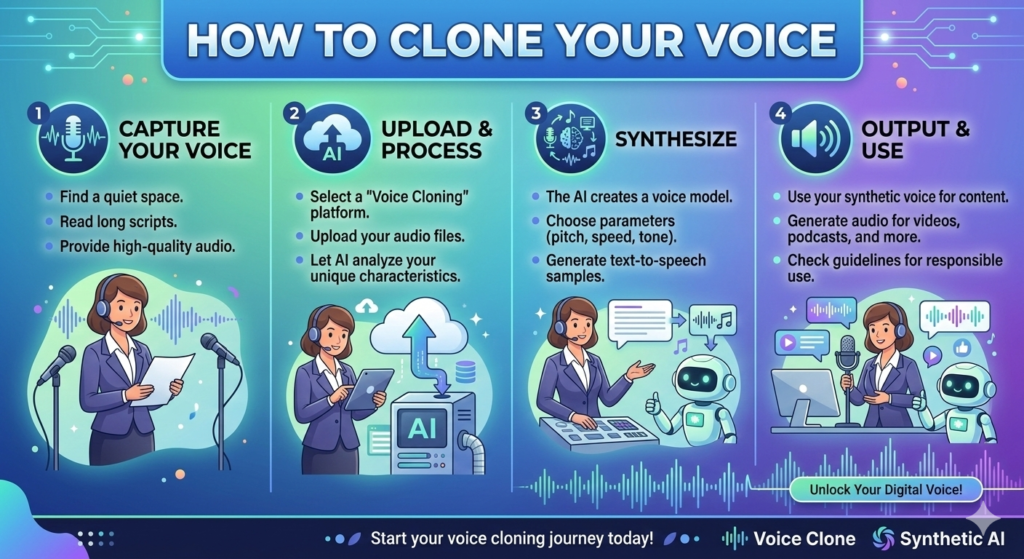
Cloning your voice is easier than many people think. Most AI tools follow a similar process.
step 1 create an account
First, sign up for an AI voice platform such as ElevenLabs or Descript. Many tools offer free plans that allow you to test voice cloning features.
step 2 record your voice sample
The AI needs a short audio sample to learn your voice characteristics.
Tips for better recordings:
- record in a quiet environment
- speak clearly and naturally
- avoid background noise
- maintain consistent tone
Clear recordings help the AI produce more accurate voice clones.
step 3 upload the voice recording
Upload your recording to the AI platform. The system analyzes the audio and builds a digital voice model based on your speech patterns.
This process usually takes only a few minutes.
step 4 input your blog text
After your voice clone is ready, paste your blog article into the text editor provided by the platform.
The AI will convert the written text into speech using your cloned voice.
step 5 generate the audio file
Click the generate button to create the final audio. Within seconds, your blog post will be transformed into a spoken recording.
Most tools allow you to download the audio in formats such as MP3 or WAV.
turning blog audio into a podcast
Once the audio file is ready, you can structure it into a podcast episode.
add an introduction
Start your podcast with a short introduction that includes:
- podcast name
- episode topic
- welcome message
This helps listeners understand what the episode will cover.
include background music
Light background music can make the podcast more engaging. Many creators add music during the intro and outro sections.
edit the audio
Even AI-generated audio may need minor editing. Basic editing tasks include:
- removing long pauses
- adjusting volume levels
- adding transitions
Audio editing tools make this process simple and fast.
export the final episode
Once editing is complete, export the podcast as an MP3 file. This format works well across most podcast platforms.
publishing your podcast
After creating your podcast episode, the next step is publishing it online.
Popular podcast platforms include:
- Spotify
- Apple Podcasts
- YouTube
Publishing your podcast across multiple platforms increases your reach and helps grow your audience.
You can also promote podcast episodes through your blog, email newsletter, and social media channels.
seo benefits of podcasting
Turning blog posts into podcasts can also support your search engine optimization strategy.
increased content diversity
Search engines favor websites that offer different content formats, including text, audio, and video.
higher engagement time
Podcast listeners often spend longer engaging with content compared to readers.
additional traffic sources
Publishing podcasts on multiple platforms increases the chances of people discovering your content through search and recommendations.
tips for better ai podcast content
To produce high-quality AI podcasts, follow these tips:
- write conversational scripts
- keep sentences short and clear
- include natural pauses
- add engaging introductions
- structure content with clear sections
These practices help make AI-generated audio sound more natural and engaging.
the future of ai voice content
Voice cloning technology is advancing rapidly. As AI models improve, generated voices are becoming more realistic and expressive.
In the future, creators may produce entire multimedia content systems from a single piece of writing. One blog post could automatically generate:
- a podcast episode
- a YouTube narration
- social media clips
- email newsletters
Businesses are also exploring AI voice technology for customer support, training programs, and marketing campaigns.
For bloggers and digital creators, learning how to use voice cloning tools today can provide a significant competitive advantage.
conclusion
Voice cloning technology has opened exciting opportunities for bloggers and content creators. Instead of recording podcasts manually, AI tools can convert written blog posts into realistic audio within minutes.
By repurposing blog content into podcasts, creators can reach new audiences, increase engagement, and expand their online presence.
Tools such as ElevenLabs, Descript, and Murf AI make the process simple even for beginners. With just a short voice recording and a blog article, anyone can produce a professional-sounding podcast episode quickly.
As artificial intelligence continues to evolve, voice cloning will likely become a standard tool in content creation workflows. Creators who adopt this technology early will be able to produce more content, grow their audiences faster, and stay ahead in the competitive digital landscape.
faq
what is voice cloning
Voice cloning is an AI technology that creates a digital replica of a person’s voice so text can be converted into speech that sounds like the original speaker.
can ai clone my voice accurately
Yes. Modern AI tools can produce highly realistic voice clones using only a short recording.
how long does voice cloning take
Most platforms can create a voice clone within a few minutes after analyzing your audio sample.
can i make money from ai podcasts
Yes. AI-generated podcasts can be monetized through sponsorships, affiliate marketing, and advertising.
do i need expensive equipment to clone my voice
No. Most voice cloning tools only require a basic microphone or even a smartphone recording to create a voice model.